

How-To Guide › Asking and reading answers
Read an answer: citations, freshness and evidence
Every substantive claim cites its source, and every answer shows how fresh its sources are.
Who it's for
Everyone.
What you need first
Nothing: you can start now.
Screenshots use demo data and fictional companies.
Steps
The first line, in large type, is the call. Then the reasoning, By the numbers, The strongest case against, What would change my call and the Next move.
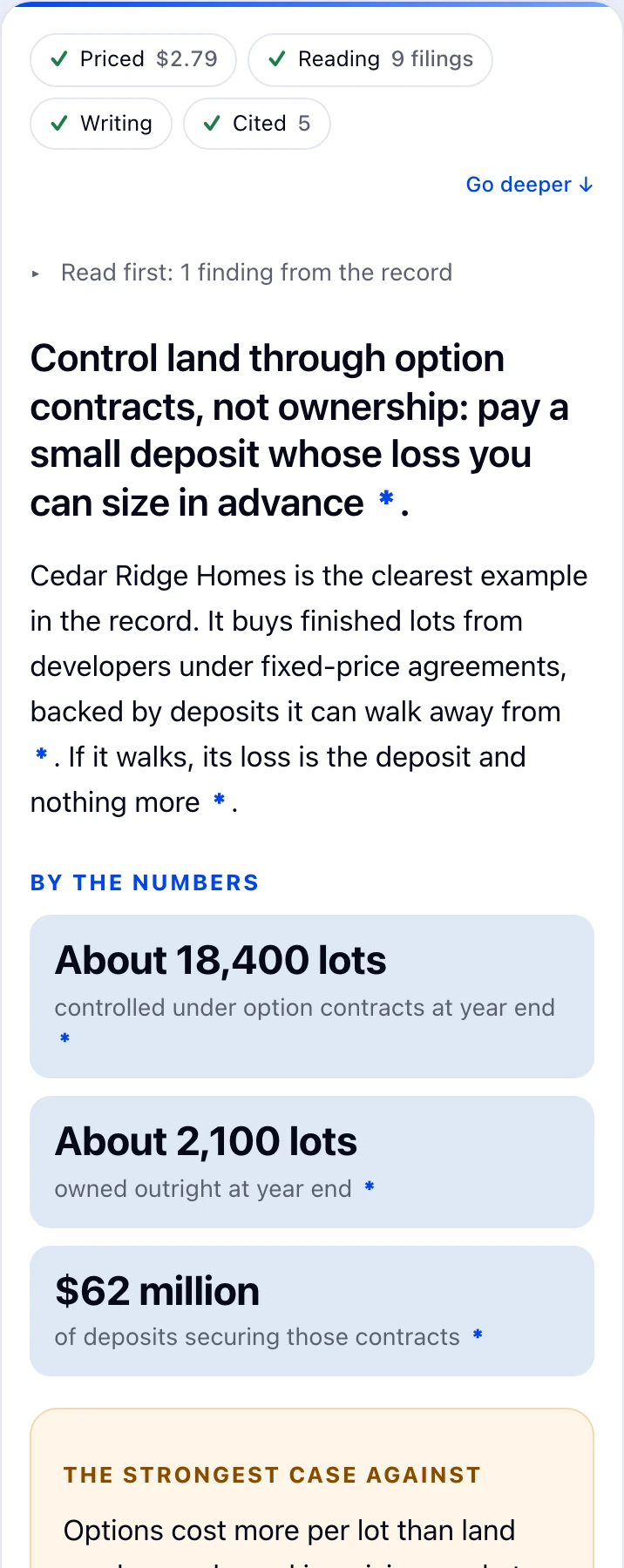
Each blue * is a citation. Hover over it to preview the quoted passage, or tap it to open the source (for example the SEC filing or the agency record).
Figures can come from hard data, not just prose: companies' reported financials from the XBRL data in their SEC filings (with the filing and period), ratios computed from them with their inputs, and U.S. economic series from the Federal Reserve, Treasury, Bureau of Labor Statistics and Census Bureau, each with its release date. While it works, the progress line says when EnemoAi is checking the numbers.
Read first (above the answer) lists what EnemoAi found while reading.
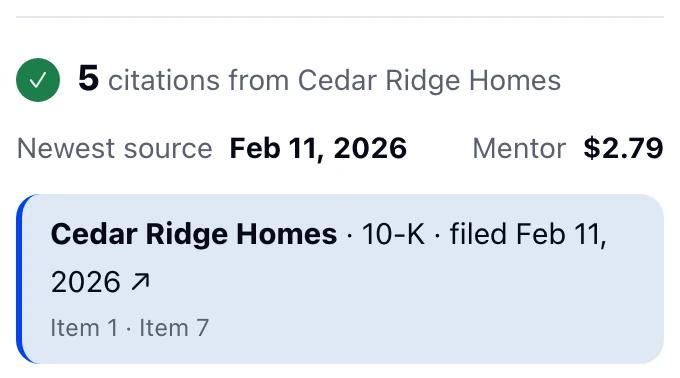
The evidence under the answer shows how many citations, from which companies, the date of the newest source and what the question cost, then each source itself: the company, the form, the date it was filed and the sections cited, each a link to the original.
What happens next
Judge the call yourself: every claim links to where it comes from. Your business makes the final decision; EnemoAi is not legal, investment, tax or accounting advice.
Common problems
- A source link doesn't open
- Some public sites block pop-ups or are briefly down; try again, or copy the answer with its sources.